
Protect your critical wiring from rodent damage with ABB nylon conduits
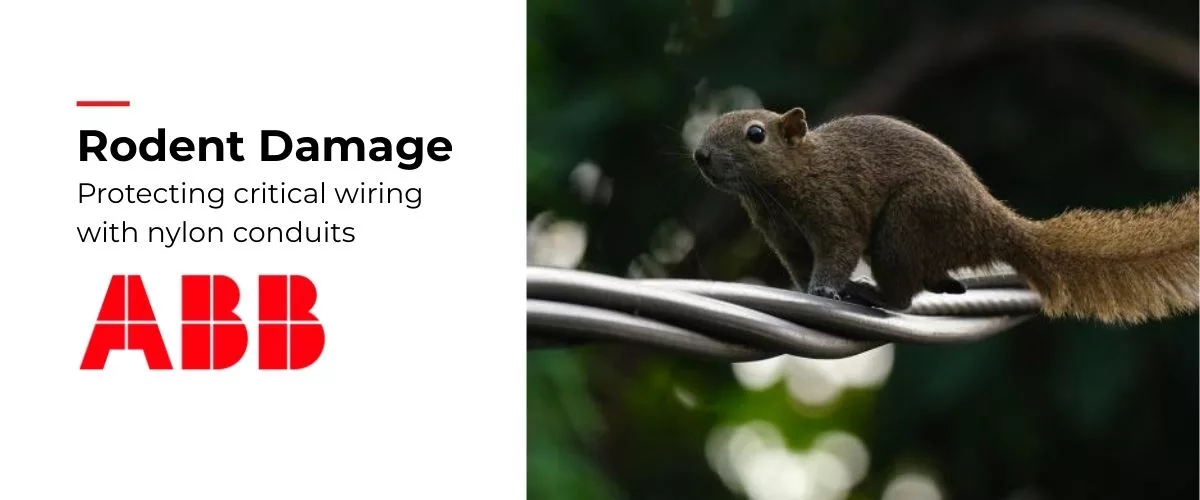
Protect Your Critical Wiring from Rodent Damage with ABB Nylon Conduits
As a leading provider of cable protection solutions, AES UK prioritises the safety and reliability of your electrical systems. In partnership with ABB, we offer proven solutions to a common yet costly problem: rodent and wildlife damage to cables. ABB’s research has identified effective strategies to protect wiring, with nylon cable protection systems emerging as one of the most durable and reliable solutions. By adopting these advanced systems, businesses can reduce downtime, improve network reliability, and safeguard critical infrastructure.
The Impact of Rodent Damage on Electrical Systems
Rodents are a major cause of electrical failures, often chewing through cable sheathing and conduits. This can lead to substantial costs from power outages, service disruption, repair work, lost revenue, and even regulatory penalties. Beyond financial losses, exposed or damaged cables create serious safety risks, including electrical short circuits and potential fire hazards. Traditional deterrents – traps, poisons, or ultrasonic devices – often fail, highlighting the need for robust and long-lasting protection.


Why Nylon Conduits Are the Smarter Choice
Soft cable insulation, like PVC or polypropylene (PP), is particularly vulnerable. Rodents are attracted to the rough surfaces, leaving bite marks while marking territory. This repetitive damage can lead to system failures and expensive repairs.
Nylon conduits, in contrast, provide superior protection:
-
Smooth surfaces prevent scent marking, discouraging rodents from repeated attacks.
-
High structural integrity resists chewing, safeguarding thermoplastic-insulated and sheathed cables.
-
Enhanced durability against fire and corrosion, making them ideal for rail, construction, hazardous environments, and heavy-duty applications like farm vehicles.
No Nesting in Nylon
Rodents typically avoid polyamide (nylon) due to its tough texture and unappealing taste. Its elasticity causes teeth to slip, preventing significant damage. This makes nylon conduits highly effective in preventing both infestation and cable damage.
ABB provides a wide range of flexible and PA6 nylon conduit solutions, designed to protect critical wiring from rodents and wildlife across multiple industries.

Protect against all threats – birds included
While rodents are a common hazard for ground-level cable installations, birds can present an equally serious risk to rooftops, plant equipment, solar installations and other elevated sites. Exposed cable runs in these areas often provide convenient perching or nesting points, increasing the likelihood of repeated contact and damage.
Without suitable protection, birds pecking, clawing or nesting around cabling can quickly wear through outer sheathing and expose the wiring beneath. This can lead to moisture ingress, corrosion, signal disruption, short circuits and costly unplanned maintenance. Over time, even minor surface damage can develop into larger reliability and safety issues.

AES UK: Supporting Your Cable Protection Needs
AES UK is dedicated to helping businesses protect their electrical infrastructure. As a trusted distributor of ABB’s cable protection solutions, we offer expert guidance on implementing nylon conduit technology. Whether in rail, construction, or industrial sectors, our team provides tailored advice to protect your cables against rodent and wildlife damage.
With local expertise and industry knowledge, AES UK ensures your electrical systems remain safe, reliable, and resilient against environmental threats.
Nylon Conduits Range
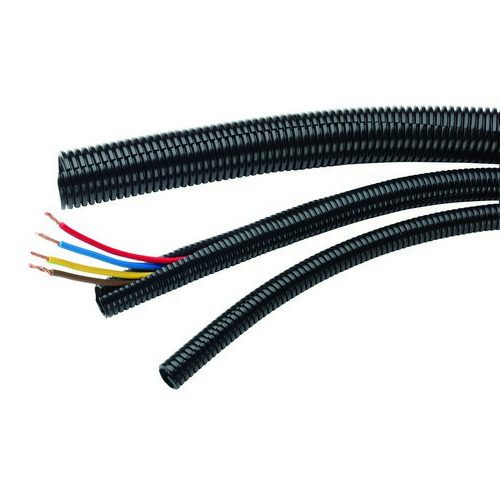

Harnessflex NC12-S 12mm NC Split Flexible Conduit – 100m
£60.65 incl. VAT - £50.54 excl. VATHarnessflex NC10-S 10mm NC Split Flexible Conduit – 100m
£56.18 incl. VAT - £46.82 excl. VAT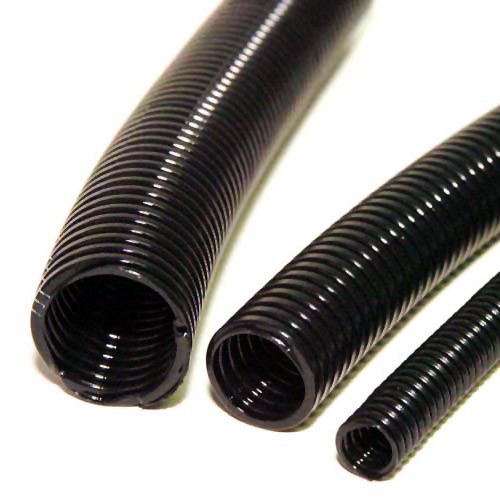
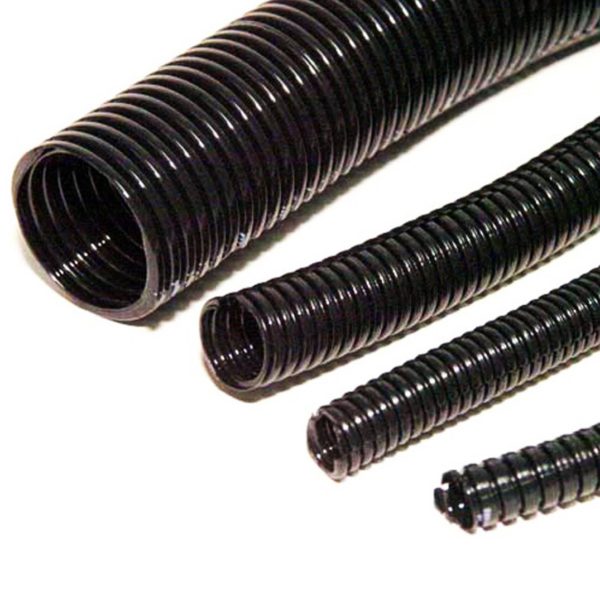
Harnessflex CTPA12 12mm CTPA Flexible Conduit – 100m
£52.14 incl. VAT - £43.45 excl. VATRead the Full Article on ABB’s Website:
https://new.abb.com/low-voltage/products/conduit-fittings/adaptaflex/news/bites-that-cost-billions-$